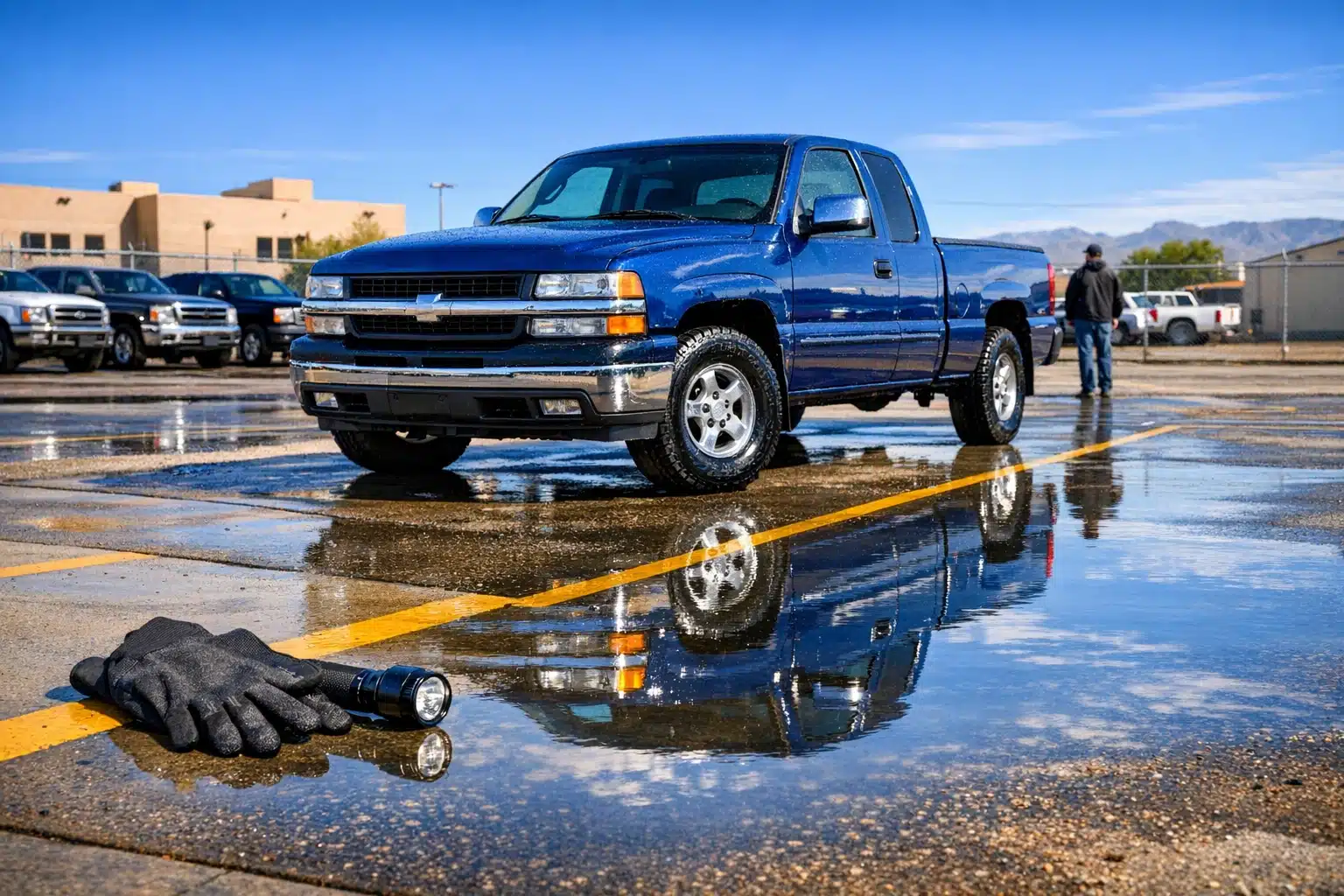
 Artificially generated image
 Guide to Police Impound Pickup Trucks
Outline and Why Police-Impound Pickup Trucks Matter
Police-impound pickup trucks sit at the intersection of value, risk, and practicality, which is exactly why they draw attention from contractors, first-time truck buyers, small business owners, and weekend tinkerers alike. A pickup is not just transportation; it can be a rolling toolbox, a family hauler, a tow rig, or the machine that rescues a moving day from turning into chaos. When one appears at an impound auction, the price tag can look tempting, but the real story usually lives in the paperwork, the condition report, and the fine print that many bidders skim too quickly.
This guide follows a simple outline so readers can move from curiosity to informed decision-making. First, it explains what police impound actually means and why pickup trucks are often found in these sales. Next, it covers the legal and administrative side, including titles, fees, and release rules. The article then moves into truck-specific inspection points, since a pickup with hidden suspension damage or a worn transmission can empty a budget fast. After that, it compares police-impound purchases with regular dealership and private-party buying. Finally, it offers practical bidding and ownership advice for readers who are seriously considering one of these vehicles.
Understanding the topic matters because police-impound vehicles are not sold under the same assumptions as a certified pre-owned truck on a dealer lot. Many are offered as-is, with limited or no guarantees. Some have been abandoned. Others were seized, towed after arrests, repossessed, or stored because of unpaid fines and administrative holds. The reasons vary by jurisdiction, and so do the rules. In one county, a buyer may leave with a clean title process and a straightforward bill of sale. In another, the same buyer may need extra inspections, emissions paperwork, or a bonded title route before the truck is road-ready.
A pickup truck also deserves more scrutiny than a small commuter car because the workload is different. Buyers care about payload, towing condition, frame integrity, axle wear, bed damage, and evidence of hard use. A truck that looks rough may still be mechanically solid, while one with fresh paint may hide a hard commercial life. That contrast is what makes police-impound pickup trucks so interesting. They are rarely simple, sometimes rewarding, and always worth understanding before money changes hands.
How Pickup Trucks End Up in Police Impound Lots
To understand the value and risk of police-impound pickup trucks, it helps to know how they arrive there in the first place. Contrary to the popular image, not every impounded truck was involved in a dramatic police chase or criminal investigation. In reality, many impounded pickups enter storage through ordinary administrative processes. A truck may be towed after being parked illegally, left abandoned on private or public property, involved in a DUI-related arrest, connected to unpaid citations, or held because ownership could not be immediately verified. In some cases, lenders, municipalities, or contracted tow yards eventually move the vehicle into a public auction pipeline when deadlines pass and the owner does not reclaim it.
Pickup trucks are especially common in impound inventories because they are used in so many settings. They appear in construction fleets, landscaping businesses, farm operations, municipal work, trades, and personal transportation. That broad usage means more trucks on the road, and more trucks caught up in towing and storage systems. Heavy-duty models may come from work environments where maintenance was practical but cosmetic care was secondary. Half-ton pickups may have lived a mixed life, commuting during the week and towing a trailer on weekends. The challenge for a buyer is that the auction listing rarely tells the whole story.
Several common pathways lead a pickup truck to impound sale:
– Abandonment after breakdown or owner disappearance
– Arrest-related tow and storage without timely retrieval
– Seizure tied to legal proceedings, later cleared for disposal
– Accumulated fines, expired registration, or municipal violations
– Repossession and contracted tow-yard liquidation in some regions
Each route can affect the condition and paperwork. A truck abandoned after mechanical failure may have major drivetrain trouble. A seized truck may have sat unused for months, which can create battery, tire, seal, and fuel system issues even if it ran fine before storage. Long idle periods can be surprisingly hard on vehicles. Fluids absorb moisture, tires flat-spot, rodents chew wiring, and interior mold develops if windows or seals were compromised.
The auction environment adds another layer. Some impound lots allow public preview days; others offer only basic photos and a vehicle identification number. Some trucks start and idle, while others are listed as non-running. Many are sold exactly as seen, with no test drive and no promise that the odometer reading reflects actual mileage. That is why buyers need to think less like bargain hunters and more like investigators. A police-impound pickup can be a useful asset, but its origin story often explains the risks better than its paint color ever will.
Titles, Fees, and the Rules Buyers Need to Know
If condition decides whether a police-impound pickup truck is worth owning, paperwork decides whether it is worth buying. For many inexperienced bidders, the legal and administrative side is where the real surprises begin. A low hammer price feels exciting until storage charges, buyer premiums, title delays, transportation costs, taxes, and registration fees start stacking up like bricks in the bed. The truck may be affordable at first glance, but the total acquisition cost is what matters.
Title status should be the first major checkpoint. Some impounded pickups are sold with a standard title, others with a lien-sale packet, and some with salvage, rebuilt, or otherwise branded title histories depending on the state and the vehicle’s circumstances. A branded title does not automatically mean the truck is unusable, but it changes resale value, financing options, and insurance availability. Buyers who plan to finance the truck later or sell it within a year should pay special attention here. A bargain that is hard to insure or difficult to register can quickly stop looking like a bargain.
Common cost categories often include:
– Buyer premium charged by the auction platform or yard
– Sales tax or state transfer tax
– Title, plate, and registration fees
– Storage fees if the truck is not removed promptly
– Towing or trailer transport if it cannot be driven legally or safely
– Emissions, safety, or VIN inspection costs where required
In many markets, buyer premiums alone can add 5 percent to 10 percent or more to the winning bid, and daily storage charges can run from modest to painful. Some tow yards require removal within a very short window, sometimes 24 to 72 hours after purchase. That means buyers need a plan before bidding. If the truck does not run, can you tow it? If it has no plates, is temporary transit paperwork required? If the keys are missing, what will replacement and programming cost? Modern pickups with transponder keys and electronic modules can turn a small inconvenience into a four-figure issue.
Another important detail is release timing. A vehicle may appear in an auction catalog while still moving through local administrative channels. Buyers should confirm when title documents will actually be available. It is not uncommon for a truck to be paid for promptly but take longer to complete title transfer than the buyer expected. That delay matters if the truck is intended for immediate work use.
The best approach is simple and unglamorous: read every auction term, call the lot with specific questions, verify local registration rules, and budget beyond the winning bid. Pickup trucks are useful tools, but tools are only useful when you can legally own, insure, register, and move them. In the world of police-impound sales, the paperwork often deserves more attention than the chrome.
Inspecting a Police-Impound Pickup Truck Before You Bid
Inspection is where emotion must step aside and let discipline drive. Police-impound pickup trucks can look rugged and appealing even when serious wear hides underneath. A truck with aggressive tires, a spray-in bedliner, and a high stance may trigger the imagination instantly. You picture lumber runs, trailer hookups, muddy back roads, or a business logo on the door. Then reality taps the fender: worn ball joints, a bent frame crossmember, slipping transmission, or four-wheel-drive components that have not engaged properly in years. The goal of inspection is not to find perfection. It is to understand what problems are visible, what risks are likely, and what repair budget would still make the purchase reasonable.
Pickup-specific checks matter because trucks work harder than many passenger cars. Start with the frame and underbody. Look for rust, cracks, fresh undercoating that may hide corrosion, and signs of impact near tow points or suspension mounts. Inspect the bed for abuse beyond normal scratches. A scarred bed floor is expected in a used work truck, but severe deformation can hint at overloading, accidents, or repeated hard commercial use. Then examine the hitch area. Excessive rust, bent mounts, improvised wiring, or damage around the receiver can indicate rough towing history.
Key areas to inspect include:
– Engine oil condition, coolant level, and visible leaks
– Transmission engagement and fluid color if inspection rules allow
– Tires for uneven wear suggesting alignment or suspension issues
– Front-end components such as control arms, tie rods, and bushings
– Differential housings, transfer case, and driveshaft condition
– Brake lines, rotors, and signs of prolonged outdoor storage
– Interior switches, warning lights, and missing modules or trim
Mileage alone does not tell the full story. A 170,000-mile fleet truck with service stickers and predictable wear may be safer than an 85,000-mile truck that sat unused, was modified carelessly, or suffered repeated neglect. Watch for aftermarket lift kits, oversized wheels, cut wiring for accessories, and non-factory tuning equipment. These changes are not automatically bad, but they increase the number of unknowns. On an impound truck, unknowns cost money.
If the auction allows a start-up, listen carefully. A cold start can reveal timing noise, exhaust leaks, injector clatter that sounds excessive, or battery weakness. Shift quality, if observable, is valuable information. If driving is not allowed, even a static inspection can tell you a lot. Smell the cabin for mold or fuel odor. Check the dashboard for missing warning light bulbs. Look for mismatched paint, uneven panel gaps, and windshield stickers that hint at past fleet use or maintenance intervals.
Many experienced buyers bring a flashlight, code scanner, tread gauge, gloves, and a notebook. The process is a bit like reading footprints before entering a forest. The truck has already lived its life; your job is to learn enough of that story to decide whether the next chapter should be yours.
Comparing Impound Purchases With Dealers, Private Sellers, and Public Auctions
Police-impound pickup trucks are often discussed as if they exist in a category of unbeatable deals, but that view misses the trade-offs. The better question is not whether impound trucks are cheap. It is whether they are a better fit for your goals than the other ways to buy a pickup. Dealers, private sellers, online auction platforms, and fleet liquidation channels all offer different balances of price, transparency, and convenience. Comparing them side by side helps buyers avoid chasing the wrong type of deal.
A dealership usually offers the highest purchase price, but buyers receive something in return: clearer title handling, easier registration, financing access, and in some cases limited warranty protection or reconditioning. A private-party sale can be less expensive and may allow test drives, service records, and direct questions to the owner. Fleet auctions sometimes provide trucks with known maintenance schedules, though cosmetic wear can be heavy. Police-impound sales often sit at the opposite end of the spectrum. Prices may start lower, but uncertainty is higher and buyer protection is lower.
Here is a practical comparison:
– Dealer purchase: higher price, more convenience, better paperwork support
– Private seller: moderate price, variable honesty, often better personal history
– Fleet or government surplus auction: mixed prices, sometimes stronger service records
– Police-impound auction: potentially lower entry price, but fewer guarantees and more hidden variables
The financial comparison becomes clearer when total cost is considered. Imagine one impound pickup sells for several thousand dollars less than a similar private-party truck. That difference can disappear if the impound vehicle needs tires, brakes, battery replacement, towing, key programming, title correction, and front-end work within the first month. On the other hand, a buyer with mechanical skill, access to affordable parts, and patience for paperwork may do very well with an impound truck. This is why the best option depends less on the market and more on the buyer’s resources.
There is also the issue of time. Dealers trade money for speed and predictability. You can often drive away the same day. Police-impound buying may require preview attendance, auction registration, payment deadlines, transport arrangements, and follow-up with the motor vehicle office. For a buyer who needs a dependable work truck by Monday morning, that process may be too uncertain. For a hobbyist or small operator who can handle some downtime, it may be worthwhile.
The smartest buyers do not romanticize any channel. They compare. They price equivalent trucks in the local market. They estimate likely repairs honestly. They choose the purchase route that matches their tolerance for risk. A police-impound pickup truck can be a smart buy, but only when it beats the alternatives after every cost, delay, and repair is counted.
Bidding Strategy, Ownership Planning, and Final Takeaways for Buyers
Once you understand where police-impound pickup trucks come from, how titles work, what to inspect, and how they compare with other buying routes, the final step is strategy. This is the stage where many sensible people suddenly become emotional because an auction creates urgency. The countdown clock shrinks, the bid increment jumps, and a truck that looked average ten minutes earlier now feels like destiny. Good buying strategy is really a system for staying calm when the room gets loud.
Start with a firm maximum budget that includes more than the bid itself. A practical formula is simple: expected purchase price plus fees plus transport plus immediate repairs plus registration plus a contingency reserve. If the total exceeds what a comparable road-ready truck costs in your area, walk away. That discipline matters because pickup trucks can generate surprise expenses quickly. Even common repairs such as tires, brakes, shocks, and sensors are more expensive on larger vehicles than many first-time buyers expect.
Useful bidding rules include:
– Never bid before you know the title status
– Assume as-is means exactly that
– Price repairs using realistic local labor and parts costs
– Leave room for unseen issues, especially on non-running trucks
– Avoid bidding wars triggered by ego rather than value
– Have transport arranged before auction day if the truck may not be drivable
Ownership planning matters just as much as winning. Ask yourself what role the truck will play. If it is meant for daily commuting, comfort, fuel economy, and reliability may matter more than towing capacity. If it is for work, payload, bed condition, and drivetrain durability move to the front of the list. If it is a project truck, then purchase price and parts availability may outweigh cosmetic flaws. Matching the truck to the mission prevents expensive mismatches, such as buying a heavy-duty diesel for short urban trips or a half-ton pickup for a towing job it cannot comfortably handle.
Insurance and registration should also be confirmed early, especially if the vehicle has a branded title or previous damage history. Some buyers make the mistake of solving the mechanical puzzle first and the legal puzzle later. The better order is to check both together. A truck that runs beautifully but stalls in the paperwork lane is still a problem.
For the target audience, the takeaway is straightforward. Police-impound pickup trucks can offer real value, particularly for mechanically informed buyers, small businesses, and patient shoppers who do careful homework. They are not magic bargains, and they are not automatically trouble either. They are opportunities wrapped in uncertainty. If you inspect carefully, verify the documents, budget for the full cost, and bid with discipline, you can make a practical decision rather than an impulsive one. That is the difference between driving home with a useful truck and towing home an expensive lesson.