 Artificially generated image
 Police Impound Trailers: What Buyers Should Know
Police-impound trailers can look like rare bargains, but the real value depends on paperwork, condition, auction rules, and the buyer’s ability to spot risk before the bidding starts. A trailer sitting quietly behind a chain-link fence may have a clean title and solid frame, or it may hide corrosion, missing parts, and fees that turn a cheap win into an expensive lesson. Learning how these sales work helps buyers compare true costs, avoid haste, and bid with much more confidence.
Outline
This article is organized into five practical parts: how trailers become impounded, how auction sales work, how to inspect condition and documents, how to budget and bid wisely, and what happens after the purchase. The aim is simple: help buyers separate a workable opportunity from an expensive project.
How Police-Impound Trailers Enter the Market
The story of a police-impound trailer usually begins long before any bidder sees a lot number taped to the frame. Trailers are impounded for many reasons, and that origin matters because it often shapes the condition, legal status, and paperwork available at sale. Some are towed after traffic stops or registration violations. Others are recovered after being abandoned on private or public property. In some cases, a trailer is connected to a criminal investigation and released only after legal proceedings allow it to be sold or otherwise disposed of. Municipalities, sheriff’s departments, and contracted tow yards may all be involved, which is why the process looks slightly different from one county to the next.
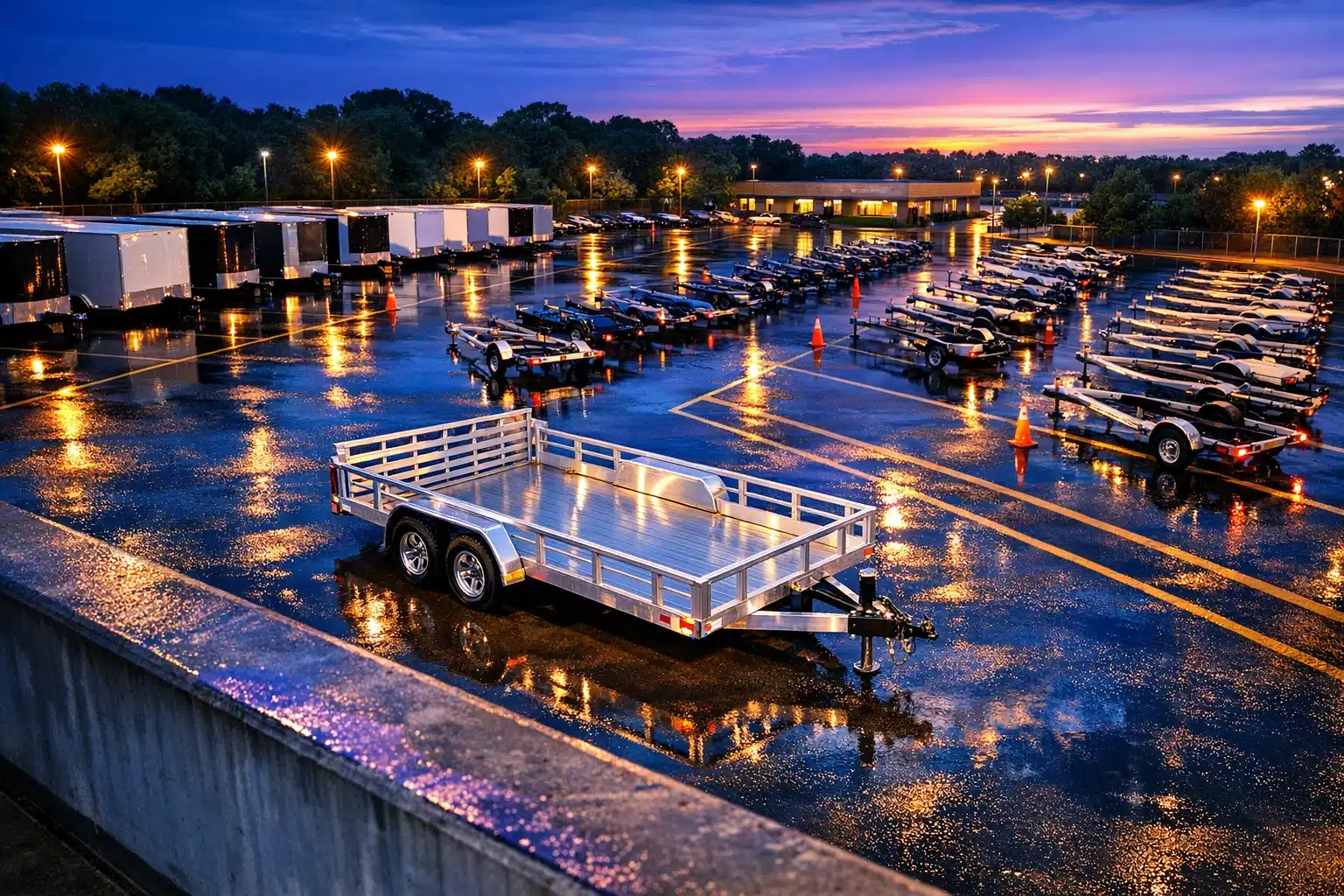
The inventory itself can be surprisingly varied. A police impound sale may include small utility trailers, enclosed cargo trailers, boat trailers, equipment trailers, and occasionally larger travel or recreational trailers. That variety is one reason buyers are drawn to these events. A landscaper may be searching for a low-cost equipment hauler, while a weekend DIY enthusiast may just need a simple trailer for lumber, garden waste, or motorcycles. The appeal is easy to understand: the auction environment creates the possibility of buying below typical retail pricing. Still, “possible” is the important word here, because not every impounded trailer is a bargain, and not every trailer is legally simple to transfer.
Why do these trailers end up for sale at all? Usually, the previous owner has failed to reclaim the unit within a legally required holding period, or the relevant authority has obtained the right to dispose of it. Depending on state or local rules, that can involve mailed notices, public notices, lien procedures, and storage documentation. If paperwork is incomplete, the trailer may be sold with a bill of sale rather than a standard title. For some buyers, that is manageable. For others, it can become the biggest obstacle in the entire deal.
It also helps to understand that “police impound” does not always mean a dramatic backstory. Sometimes the reason is mundane: unpaid towing and storage charges that exceeded the trailer’s remaining market value. In practical terms, buyers should think in categories rather than assumptions:
- Administrative impounds, often tied to registration or parking issues
- Abandoned property disposals
- Lien sales handled by towing or storage companies
- Released evidence or court-authorized disposals
That context gives buyers a more realistic lens. A trailer is not valuable simply because it appears in an impound yard, and it is not automatically troublesome either. The real question is whether its legal path to sale, present condition, and expected repair needs line up with the buyer’s intended use.
Where to Find These Trailers and How the Auction Process Usually Works
For many first-time buyers, the hardest part is not bidding. It is figuring out where legitimate impound-trailer sales are actually listed. Depending on the jurisdiction, sales may be announced through city websites, county sheriff pages, public auction calendars, towing company notices, surplus portals, or specialized auction platforms. Some events take place in person in a yard or storage lot, while others are conducted entirely online with scheduled preview windows. The format matters because it affects how much inspection time you get, how fast you must pay, and whether you can physically examine the trailer before committing money.
Most auctions follow a similar rhythm. Buyers register, review terms, inspect the available units if a preview is offered, place bids, and then pay within a short time after winning. Payment windows are often tight. Some auctions require same-day payment, while others allow 24 to 72 hours. Many also impose a buyer premium, which is an extra percentage added to the hammer price. In public and surplus auctions, premiums commonly fall somewhere in the single digits to low teens, though the exact rate varies by operator. Taxes, title fees, storage balances, document fees, or gate fees may be separate. That is where a cheap-looking price can quietly grow teeth.
The “as-is, where-is” rule is another major feature. In plain language, the trailer comes with no warranty, no guarantee of roadworthiness, and usually no promise that hidden defects will be disclosed. A dealer might offer a limited inspection, service record, or return option. An impound auction almost never does. The burden is on the buyer to evaluate what can be seen and to accept what cannot be tested. That difference is crucial when comparing auction value with dealer value. A lower purchase price is not the same thing as a lower ownership cost.
Before bidding, buyers should usually confirm these details:
- Whether a title is included, available later, or not provided at all
- Whether the VIN is visible and matches the paperwork
- How long the buyer has to remove the trailer from the lot
- What payment methods are accepted
- Whether refunds are ever allowed for title or condition issues
Online bidding adds convenience, but it can also detach people from the object itself. Photos flatten damage, obscure rust, and make bent crossmembers seem harmless. In-person auctions create their own pressure, because the pace and crowd energy can push hesitant buyers to stretch beyond a rational limit. Either way, the smart approach is the same: read every term, know every fee, and treat the lot description as a starting point rather than a complete mechanical report.
How to Inspect a Police-Impound Trailer Before You Bid
A trailer does not need an engine to produce expensive surprises. In fact, because many buyers focus only on size and price, basic structural and legal checks are often overlooked. Inspection is where good intentions become actual risk control. If preview access is available, use it. Bring a flashlight, gloves, a tire gauge if permitted, a phone for photos, and a printed checklist. Even a short walkaround can reveal whether you are looking at a usable piece of equipment or a rolling repair invoice.
Start with the frame. Rust is common, but not all rust is equal. Surface oxidation may be manageable; deep scaling around welds, spring hangers, crossmembers, or the tongue can signal a serious structural problem. Look at the coupler, safety chains, jack, and any visible brake hardware. Check whether the trailer sits level or leans to one side, which can hint at axle damage, broken springs, uneven loading history, or a bent frame. Tires deserve more than a quick glance. A trailer with decent tread can still need immediate replacement if the sidewalls are cracked or the tires are old. In many markets, a full set of trailer tires alone can cost several hundred dollars, especially on tandem-axle units.
For enclosed trailers, inspect the roofline, floor, ramp, hinges, sidewalls, and seals. Water intrusion leaves clues: soft flooring, swollen wood, staining, moldy odors, or corroded fasteners. On utility trailers, look closely at deck boards, stake pockets, ramps, tie-down points, and lighting. Boat trailers add another layer because bunks, rollers, winches, and corrosion from saltwater use can change the repair equation quickly.
Paperwork inspection is just as important as physical inspection. Confirm whether the trailer has:
- A clean title
- A salvage or rebuilt designation
- A bill of sale only
- A missing or unreadable VIN
That last point can stop a transaction from being useful even if the trailer itself looks solid. Some states make replacement paperwork possible, but the process can involve inspections, affidavits, fees, and time that casual buyers do not expect. Also watch for signs of tampering around VIN plates or stamped numbers. If anything appears altered, ask questions before bidding.
A helpful comparison is this: when buying from a private seller, you can often ask direct questions about use, maintenance, or recent repairs. At an impound auction, silence is part of the package. That is why buyers must learn to read physical evidence. Worn wiring, hacked light connections, mismatched wheels, bent fenders, seized hubs, or fresh spray paint over rust all tell a story. The trailer may still be worth buying, but only if the price reflects the repairs waiting just beyond the gate.
Pricing, Hidden Costs, and Smart Bidding Strategies
Most people are drawn to police-impound trailers for one reason: price. That instinct makes sense, but price at auction is only the visible tip of the cost iceberg. Beneath the bid are fees, transport, registration, immediate maintenance, and the possibility of unexpected repairs once the trailer is loaded, lifted, or driven at highway speed. A calm bidder thinks in totals, not headlines.
The smartest starting point is to establish a realistic market comparison. Look at similar trailers in three places: private local listings, dealer inventory, and recent auction results if available. Compare size, axle count, construction type, braking equipment, and overall condition. A basic utility trailer in usable shape will naturally sit in a different value band than an enclosed cargo trailer or a heavy equipment hauler. The goal is not to guess the lowest possible bargain. The goal is to define what a comparable, legally transferable trailer would cost elsewhere and then subtract the risk you are taking by buying through impound channels.
That risk adjustment is the heart of good bidding. A buyer who expects to replace tires, lights, bearings, wiring, and deck boards should deduct those costs before the first bid is placed. Add auction fees as well. A simple budgeting formula can help:
- Estimated market value of a similar roadworthy trailer
- Minus known repair costs
- Minus a reserve for hidden defects
- Minus buyer premium, taxes, and transfer fees
- Equals your maximum bid
Once that number is set, guard it. Auction environments are designed to move quickly. In-person events have competitive energy; online platforms encourage one-more-click thinking. Both can tempt buyers to rationalize a higher price after investing time and attention. That is how a deal slips into overpayment without announcing itself.
It also helps to compare an impound purchase with a new trailer in practical terms rather than emotional terms. A new trailer may cost more upfront, but it usually comes with clear paperwork, predictable specs, and fewer immediate repairs. A private-party purchase may offer a test tow, maintenance history, and room for negotiation. An impound trailer offers uncertainty in exchange for the possibility of a lower entry price. That trade can make sense for experienced buyers, fabricators, small contractors, or mechanically inclined owners. It is less attractive for someone who needs dependable use the next morning with no downtime.
Good bidders usually share a few habits. They arrive with research, inspect before bidding, set a hard cap, and walk away when the math stops working. That final skill is underrated. There will always be another trailer, but there is no refund for auction fever.
After the Sale: Registration, Transport, and Final Advice for Buyers
Winning the bid is not the finish line. It is the handoff between purchase risk and ownership responsibility. Many buyers feel a burst of victory at auction, only to discover that the real work begins once payment is made. First comes removal. Impound yards and auction operators often give buyers a short pickup window, and storage charges can begin quickly if the trailer is not removed on time. That means you should already know how you will transport it before you bid. If the trailer is not roadworthy, you may need a flatbed, tow service, temporary repair, or a properly equipped tow vehicle with the right ball size and wiring connection.
Next comes the paperwork trail. Some states make trailer registration straightforward when a clear title is present. Others require additional verification, weight slips, VIN inspections, tax documentation, or specific forms if the sale came through a lien or impound process. Buyers should check their motor vehicle agency rules in advance rather than assuming every trailer can be registered with a simple bill of sale. The difference between “possible” and “easy” matters a lot when time and money are involved.
Once the trailer is home, a post-purchase inspection is wise even if the unit looked acceptable at the yard. Bearings, brakes, lights, reflectors, safety chains, coupler latch operation, tire pressure, and lug torque should be reviewed before regular use. Many experienced owners automatically repack bearings or replace them when the maintenance history is unknown. That may sound cautious, but a failed hub on the highway turns a small savings into a large headache very quickly.
This is also the moment to decide whether the trailer was bought for utility, resale, or restoration. Those are different goals, and they deserve different standards:
- A work trailer can tolerate cosmetic flaws if it is structurally sound and legal
- A resale project must be priced low enough to leave room for repairs and margin
- A restoration candidate should have a solid frame and obtainable parts
For the target audience, the best candidates are buyers who can inspect carefully, tolerate some uncertainty, and budget for immediate fixes without financial strain. Contractors, hobby mechanics, farmers, movers, and outdoor users may all find value in impound trailers when the numbers are right. On the other hand, buyers who need instant reliability, simple paperwork, and zero surprises may be better served by a dealer or a transparent private sale.
In the end, police-impound trailers reward preparation more than optimism. The strongest buyers are not the most aggressive bidders; they are the most disciplined observers. If you treat each trailer as a package of metal, documents, and future costs rather than as a lucky score, you are far more likely to make a purchase that works in the real world after the auction noise fades.