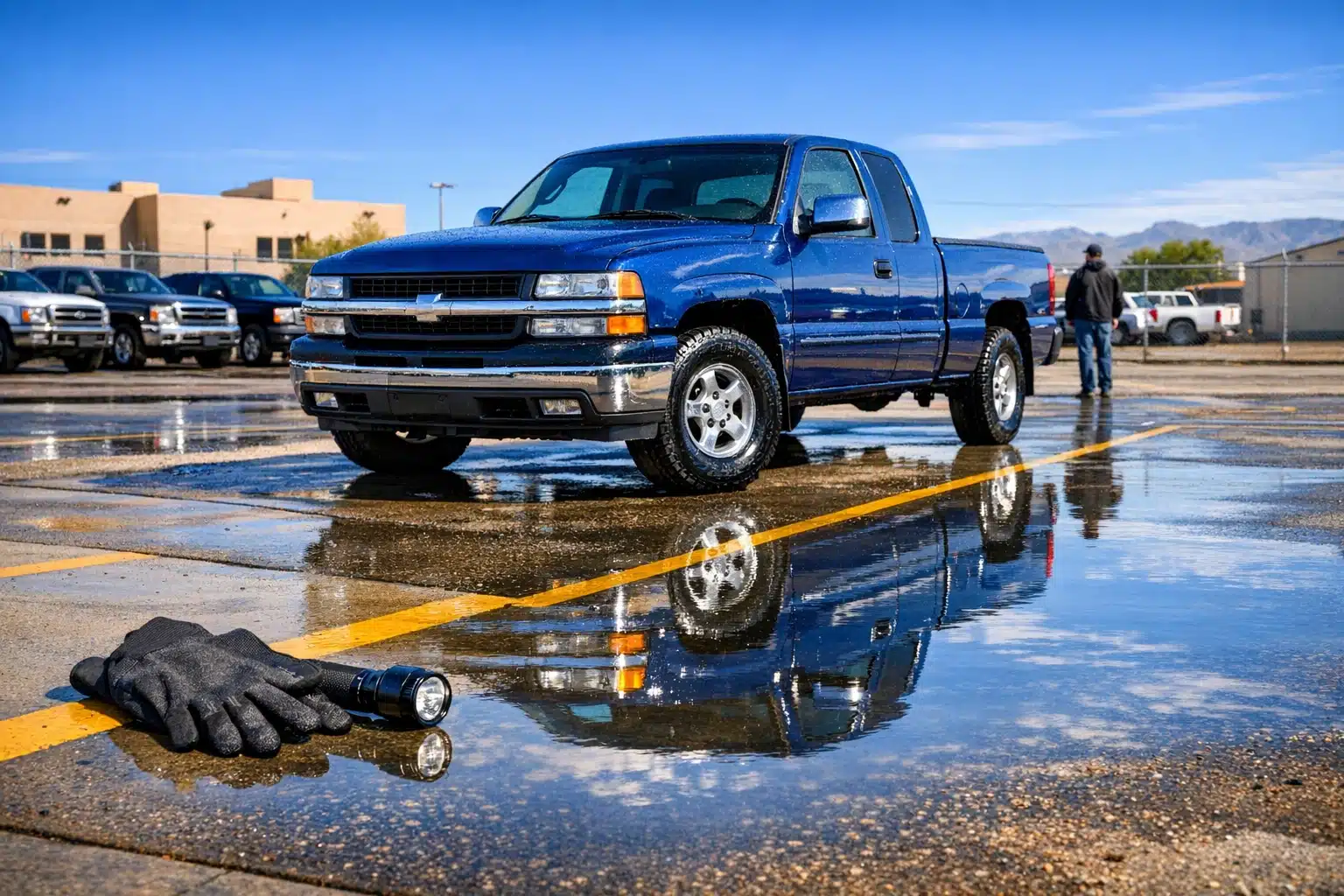
 Artificially generated image
 Police Impound Pickup Trucks: What Buyers Should Know
Police-impound pickup trucks sit at an unusual crossroads of law enforcement, logistics, and bargain hunting. Some were towed after arrests or violations, others were abandoned, repossessed, or left unclaimed long enough to be cleared for sale. For contractors, first-time truck buyers, and small resellers, these vehicles can look like overlooked workhorses with real value hiding under dust and dents. The catch is that low prices rarely tell the whole story, so understanding the process can save money, time, and regret.
Article outline:
- How police-impound pickup trucks reach public sale and why that matters to buyers.
- Where the value can be real, especially compared with dealer inventory and private-party listings.
- What to inspect before bidding, from frame condition to title status and missing equipment.
- How auction rules, fees, taxes, and paperwork change the true purchase price.
- Which buyers are well matched to impound trucks, and when walking away is the smarter move.
How Police-Impound Pickup Trucks Reach the Market
Many shoppers hear the phrase police impound and imagine every truck in the yard was seized during a dramatic criminal case. Real life is usually less cinematic. A pickup can end up in impound for ordinary reasons such as parking violations, unpaid tickets, expired registration, abandonment, towing after an arrest, or a breakdown that left it on public property. In some places, lenders, storage operators, or municipalities also channel unclaimed vehicles into the same auction pipeline. By the time the truck appears in a public listing, the story behind it may be far more administrative than sensational.
That distinction matters because the path into impound often shapes the amount of information available to a buyer. A truck that was abandoned may have unknown maintenance history and missing keys. One released after a legal hold may sit for months before sale, which can mean a dead battery, stale fuel, flat-spotted tires, or weather damage. A vehicle towed after traffic violations might have been running recently, yet still carry unpaid fees that had to be resolved before transfer. The machine itself may be ordinary; the paper trail is where things become interesting.
Most agencies or contracted auction companies follow a process before sale. They typically attempt owner notification, wait through a statutory holding period, and then clear the vehicle for disposal or auction. State and local rules vary, but the broad pattern is similar:
- the truck is impounded and logged into a storage system
- the registered owner or lienholder is notified when required
- a waiting period passes if the vehicle remains unclaimed
- the truck is assigned for auction, lien sale, or municipal disposal
- the buyer receives whatever title documentation the jurisdiction can legally provide
For pickup buyers, this process creates both opportunity and uncertainty. On the opportunity side, trucks are common utility vehicles, so impound inventories may include half-ton models, midsize pickups, fleet-spec work trucks, or older heavy-duty units. On the uncertainty side, the seller is rarely presenting a polished retail product. These sales are typically as-is, where-is transactions. That means cosmetic flaws, mechanical issues, warning lights, or incomplete service records should be treated as normal possibilities rather than rare exceptions.
It helps to think of the impound yard not as a secret showroom but as a holding pen where stories pause before changing owners. The truck may still have years of useful service left, yet the buyer must bridge the gap between appearance and reality. Understanding how these vehicles arrive at sale is the first step toward judging risk with a cooler head and a sharper eye.
Why Buyers Consider Impound Pickup Trucks in the First Place
The main attraction is simple: price. Police-impound pickup trucks can enter auction with starting bids that look modest compared with dealer lots, especially when the truck is older, dusty, or sold with limited information. That lower starting point does not guarantee a bargain, but it changes the math enough to pull in contractors, mechanics, flippers, farmers, and budget-minded private buyers. In a market where used pickups often command strong prices because of their utility, any channel that offers lower entry costs will draw attention.
Pickup trucks hold value for practical reasons. They haul tools, tow trailers, move landscaping supplies, and handle rougher daily work than many passenger cars. Even a basic two-wheel-drive truck with a plain vinyl interior can be a profit-generating asset for the right owner. A dealer may recondition such a vehicle, add overhead, and price it accordingly. An impound auction, by contrast, may offer the same truck before cosmetic cleanup and before a retail markup is attached. That gap is where buyers hope to find value.
Still, price alone is not the whole appeal. Impound inventories sometimes include configurations that are harder to find in mainstream retail channels, especially older fleet trucks built for work rather than comfort. You may see extended cabs with utility racks, long-bed models for hauling, or heavy-duty pickups that would cost more at a franchise dealer. For some buyers, those plain, durable specifications are more useful than touchscreen-heavy trims aimed at everyday commuting.
A comparison helps show why this market exists:
- Dealer purchase: usually higher price, more paperwork support, often some inspection or limited warranty.
- Private-party purchase: flexible negotiation and possible maintenance records, but quality varies widely.
- Impound auction: potentially lower purchase cost, yet less certainty, less recourse, and faster decision pressure.
There is also a psychological draw. A dusty pickup behind a chain-link fence can whisper possibility to the right person. Not romance, exactly, but a practical kind of optimism: maybe this one needs a battery, fresh fluids, and a set of tires instead of a complete overhaul. Sometimes that optimism is justified. Plenty of impounded trucks were simply neglected, not destroyed. A mechanically sound but cosmetically tired vehicle can suit a buyer who values function over polish.
However, the strongest candidates for these purchases are rarely shoppers looking for a perfect daily driver with zero hassle. The better fit is someone who understands depreciation, accepts uncertainty, and can calculate repair costs without flinching. For that audience, impound pickup trucks are not miracle deals. They are inventory with rough edges, and those rough edges can still make business sense when the numbers line up.
What to Inspect Before You Bid on an Impound Truck
If impound auctions have a golden rule, it is this: never let a low opening bid distract you from the condition of the truck in front of you. A pickup can look sturdy because trucks are built to appear capable even when they are tired underneath. Dust can hide faded paint, but it can also hide rust bubbles, body filler, cracked lamps, and leaking seals. The bed may suggest hard use, the cab may reveal long neglect, and the undercarriage often tells the bluntest truth of all.
Begin with the structure. Inspect the frame rails, crossmembers, suspension mounting points, rocker areas, and the bed floor. Surface rust is common in many regions, but deep corrosion around structural areas can turn a cheap truck into a poor bet. Look for signs of collision repair such as uneven panel gaps, overspray, mismatched paint, wrinkled inner fenders, or a bed that sits slightly out of line. On four-wheel-drive models, examine transfer case housings, front differential areas, CV boots where applicable, and evidence of fluid seepage.
Next, focus on signs of maintenance or neglect. Since test drives are often limited or unavailable, visual clues become more important:
- oil level and color on the dipstick, if access is allowed
- coolant condition and evidence of leaks around hoses or radiator seams
- transmission fluid smell or discoloration where inspection is possible
- battery age, cable corrosion, and improvised wiring
- tire wear patterns that may hint at alignment or suspension issues
- warning lights, missing gauges, or a dashboard that does not fully power up
The interior matters more than many bidders think. Excessive wear on pedals, torn seats, broken switches, and missing trim can suggest heavy mileage regardless of what the odometer says. A smoky smell, water intrusion, or mold can point to cabin leaks, flood exposure, or long storage with windows left open. Check whether keys are included, because replacing modern chipped keys or fobs can add unexpected cost. Likewise, missing catalytic converters, absent tailgates, removed radios, or stripped toolboxes are not rare in vehicles that have sat in uncertain circumstances.
Paperwork is part of the inspection too. Match the VIN on the dash, door sticker, and auction listing if possible. A vehicle-history report is not perfect, but it can reveal title branding, accident entries, mileage inconsistencies, or past registration geography that helps explain corrosion. Buyers should also account for what they cannot verify. That hidden zone is where a repair reserve becomes essential.
An experienced bidder often arrives with a flashlight, gloves, a magnet, an OBD scanner if permitted, and a calm attitude. The goal is not to find a flawless truck. The goal is to estimate, with reasonable discipline, whether the vehicle can be put to work without swallowing more money than it saves.
Auction Rules, Title Types, Fees, and the Real Cost of Ownership
Winning the bid is only one part of buying a police-impound pickup truck. The more expensive lesson often comes afterward, when buyers discover that the hammer price was just the first line on the invoice. Auction companies, municipalities, and contracted sellers commonly add buyer premiums, documentation charges, local taxes, and payment deadlines that move fast. A truck that looked cheap at first glance can become merely average after every required fee is counted.
Buyer premiums vary by venue, but charges in the range of 5 percent to 15 percent are common in many auction environments. There may also be gate fees, online bidding charges, or storage penalties if the truck is not removed promptly. If the vehicle does not run, transport has to be added as well. Towing a pickup is rarely cheap, especially if it is a heavy-duty model, locked in park, missing wheels, or stored far from home. Buyers who live on impulse often remember the bid and forget the invoice; experienced buyers do the opposite.
Title status deserves close attention because it affects registration, financing, insurance, and resale value. Not every impound truck comes with a standard clear title ready for easy transfer. Depending on jurisdiction and circumstance, a buyer may receive a lien sale document, salvage paperwork, a nonrepairable title, or a form that requires extra steps at the motor vehicle agency. General patterns include:
- clear title: usually simplest for registration and resale
- salvage title: indicates major damage or insurance classification, often lower resale value
- rebuilt title: previously salvage, then repaired and inspected under local rules
- lien or impound sale paperwork: may require additional DMV processing before regular titling
- bill of sale only in limited cases: often the riskiest scenario for registration certainty
State law matters here, so buyers should verify requirements with their local motor vehicle office before bidding, not after. Some states are stricter about emissions compliance, VIN inspections, bonded titles, or reconstructed vehicle procedures. Insurance carriers may also treat branded-title trucks differently, especially if the vehicle will be financed or used commercially.
Then comes the cost of first ownership. Even a good purchase may need fluids, filters, belts, tires, brakes, battery replacement, and basic deferred maintenance right away. A practical buyer builds a post-sale budget before attending the auction. That budget should include registration, tax, towing, keys, immediate repairs, and a reserve for surprises. Without that cushion, a supposedly affordable pickup can turn into a stalled project sitting in the driveway like a half-finished sentence.
The smartest approach is to treat the full purchase as a package, not a bid. Auction price plus fees plus transport plus repairs equals reality. When buyers calculate that full number early, they protect themselves from the most common mistake in the impound market: confusing a low entry point with a low total cost.
Conclusion: Who Should Buy a Police-Impound Pickup Truck and Who Should Pass
Police-impound pickup trucks make the most sense for buyers who are practical, patient, and comfortable making decisions with imperfect information. If you own a repair shop, run a landscaping crew, manage a farm, rebuild vehicles as a side business, or simply know how to inspect a used truck without being dazzled by a low number, this market can be worthwhile. You are not buying a polished retail experience. You are buying potential, risk, and a machine that may still have solid years left if chosen carefully.
These trucks are usually a weaker fit for shoppers who need immediate reliability with minimal downtime. If this will be your only vehicle, if you cannot absorb a surprise repair bill, or if you are unfamiliar with title complications, a standard dealer or well-documented private-party purchase may be the safer route. There is no shame in paying more for clarity. In fact, clarity is often what the extra money buys. A clean inspection, recent service records, and some form of seller accountability can be worth far more than a dramatic auction discount.
A useful way to decide is to ask a few blunt questions:
- Can I afford repairs beyond my optimistic estimate?
- Do I understand the title and registration rules in my state?
- Can I inspect this truck well enough to spot major red flags?
- Do I have a backup plan if the vehicle needs immediate work?
- Will the truck earn or save enough value to justify the uncertainty?
If several answers are no, stepping back is not caution; it is discipline. The best buyers in this space are not the boldest bidders. They are the ones who know when to stay quiet. A bargain appears only when condition, fees, paperwork, and intended use line up in the same direction. Otherwise, the cheap truck becomes an expensive distraction.
For the target audience of this topic, especially work-focused buyers and budget-conscious shoppers, the takeaway is straightforward. Police-impound pickups can be a sensible route into truck ownership, but only when approached with research, inspection skill, and a realistic repair budget. Treat each listing as a problem to solve rather than a prize to chase. Do that, and you may find a durable tool at a fair price. Ignore those steps, and the same lot that looked full of opportunity can turn into a classroom that charges tuition in cash.