 Artificially generated image
 A Practical Guide to Buying Police Impound Pickup Trucks
Police impound pickup trucks sit at a curious junction of necessity and opportunity. Some land in storage after arrests, unpaid fees, repossessions, parking violations, or abandonment, and later move into public auctions once legal waiting periods end. For buyers chasing a practical work vehicle, that pipeline can reveal lower entry prices than a dealer lot. The catch is that every bargain arrives wrapped in paperwork, uncertainty, and condition questions that deserve a calm, informed approach.
Outline
- What police impound pickup trucks are and how they end up for sale
- Where buyers can find them and how the auction process usually works
- The main advantages and drawbacks compared with dealer and private sales
- How to inspect a pickup truck before bidding, with a focus on truck-specific wear
- How to budget, bid smartly, and decide whether this route fits your needs
1. What Police Impound Pickup Trucks Actually Are
Before anyone starts browsing auction photos or imagining a low-cost workhorse, it helps to define the term clearly. A police impound pickup truck is not always a former patrol vehicle. In many cases, it is a privately owned truck that ended up in official storage after being towed, seized, abandoned, involved in a legal dispute, or left unclaimed long enough for the responsible agency or contracted tow operator to dispose of it through a lawful sale. That distinction matters because the truck’s past use influences everything from mileage expectations to maintenance patterns.
An impound yard can feel like a waiting room made of steel and dust. One truck may have been used by a contractor who hauled tools every day. Another may have spent months parked after a registration issue. A third might have been towed after unpaid tickets and then forgotten by an owner who could not cover storage costs. Because these vehicles arrive through very different paths, buyers should avoid assuming that all impound pickups are heavily abused or, on the other hand, hidden gems.
There are also legal layers behind every sale. In many jurisdictions, agencies must notify the registered owner and any lienholder before a vehicle can be auctioned. Holding periods, title procedures, and release rules vary by state and municipality. Some trucks are sold with clean titles, others with lien paperwork, and some with more complicated title histories that require extra steps at the motor vehicle office. A lower bid price means little if registration becomes difficult afterward.
Pickup trucks draw attention in impound sales for obvious reasons. They are versatile, useful for trades, appealing in rural areas, and easier to justify as a practical purchase than a novelty vehicle. Yet pickups also carry their own wear patterns. Bed damage, towing stress, suspension fatigue, and frame rust can tell a long story before the engine is even started.
At a glance, buyers should separate impound pickups into a few broad categories:
- Privately owned trucks sold after towing, abandonment, or nonpayment
- Seized trucks released for disposal once legal requirements are met
- Municipal or government surplus pickups retired from service
- Recovered vehicles that may have cosmetic damage, missing parts, or incomplete keys
Understanding those categories is the first practical step, because a former utility fleet truck and an unclaimed personal pickup can share a similar auction lane while offering very different risks and rewards.
2. Where to Find Police Impound Pickup Trucks and How the Buying Process Works
Finding police impound pickup trucks is less mysterious than many first-time buyers expect, but it does require patience and a willingness to read auction terms closely. Most sales happen through one of several channels: local police departments, sheriff’s offices, municipal surplus divisions, contracted tow yards, county asset-disposal programs, or public auction platforms that host inventory on behalf of government agencies. Some auctions are held in person on a set date, while others run online for several days with timed bidding windows.
The search usually begins at the local level. City and county websites often publish notices of upcoming vehicle auctions, surplus sales, or abandoned vehicle releases. Tow companies working under municipal contracts may also post public sale lists when impound fees remain unpaid. Online auction services widen the field considerably, but they also make it easier to get caught up in remote bidding without inspecting the truck in person. Convenience is useful; blind confidence is expensive.
The purchase process often follows a familiar pattern. Buyers register, review sale terms, inspect available listings, attend a preview period if one is offered, place bids, pay within a short deadline, and then arrange pickup or towing. Many impound sales are strictly as-is, where-is transactions. That means no warranty, no guaranteed roadworthiness, and usually no return policy once the hammer falls or the countdown clock reaches zero.
Important details often hide in the fine print, including:
- Buyer’s premiums or auction service fees
- Sales tax and title transfer charges
- Payment deadlines, often within a day or two
- Vehicle removal deadlines and storage penalties
- Whether keys are included
- Whether the truck can be started, moved, or test-driven during preview
It is also wise to look up the vehicle identification number before bidding whenever the VIN is available. A history report may reveal prior accidents, odometer inconsistencies, branded title events, or registration records that shape the truck’s true value. This step will not tell the whole story, but it can keep buyers from walking straight into known trouble.
In-person auctions offer one major advantage over purely digital browsing: context. You can look at tire wear, smell the interior, inspect the frame, and see whether the truck sits level. Online auctions make access easier for rural or out-of-state buyers, yet transportation costs, missing paperwork, and unseen damage can erase the price advantage quickly. Whether the sale is live or digital, the smartest approach is the same: read first, inspect second, bid last.
3. The Real Pros and Cons Compared with Dealer and Private-Party Trucks
The appeal of police impound pickup trucks is easy to understand. Price draws attention first. Buyers often hope to find a usable truck for less than dealer retail, and sometimes that happens. Impound inventory may include older half-ton models, fleet-style work trucks, or higher-mileage pickups that would still be useful on a farm, jobsite, or weekend property. Because these vehicles are rarely polished for showroom appeal, the starting numbers can look refreshingly plain.
Still, lower entry cost is only one side of the ledger. Compared with a dealer purchase, an impound sale usually offers far less certainty. Dealers commonly provide at least some inspection, basic reconditioning, paperwork handling, and in many cases financing options. A private seller may know the truck personally and be able to discuss repairs, quirks, and recent maintenance. By contrast, an impound auction often provides little narrative beyond year, make, model, and VIN. Buyers must build the missing story from clues.
That trade-off becomes clearer when the options are compared directly:
-
Impound sale: potentially lower purchase price, limited guarantees, compressed timelines, and less vehicle history.
-
Dealer lot: higher price, easier paperwork, possible financing, and at least some preparation before sale.
-
Private-party sale: room for conversation and inspection, but pricing can still be optimistic and records may be incomplete.
There are meaningful advantages to impound buying when expectations are realistic. Skilled mechanics, contractors with shop access, and experienced used-truck buyers can sometimes spot value that others overlook. Cosmetic roughness does not always mean structural trouble. A dirty bed, faded paint, or cracked seat may be tolerable on a truck meant to haul lumber or pull a trailer. If the drivetrain is solid and the paperwork is clean, appearance becomes a negotiating factor rather than a deal-breaker.
The downsides, however, deserve equal weight. Repairs on pickup trucks can escalate fast, especially when issues involve transmissions, transfer cases, four-wheel-drive components, turbo systems, emissions equipment, or rust near the frame and suspension mounts. A truck that seemed cheap at the bidding stage can become expensive after tires, brakes, battery replacement, fluids, towing, and overdue maintenance are added. Some buyers also underestimate the inconvenience of missing keys, dead electronics, or title delays.
The best lens is not excitement but total cost. An impound pickup truck can be a smart buy for a person who values utility, accepts uncertainty, and budgets for post-sale work. It is usually a poor match for someone who needs immediate reliability with minimal hassle by Monday morning.
4. How to Inspect an Impound Pickup Truck Before You Bid
Inspection is where disciplined buyers separate themselves from wishful ones. Pickup trucks deserve a different kind of review than compact cars because they are often used for towing, hauling, off-road travel, and hard commercial miles. A shiny hood tells you very little. The real story sits underneath, inside the bed, around the hitch, and in the way the suspension carries weight.
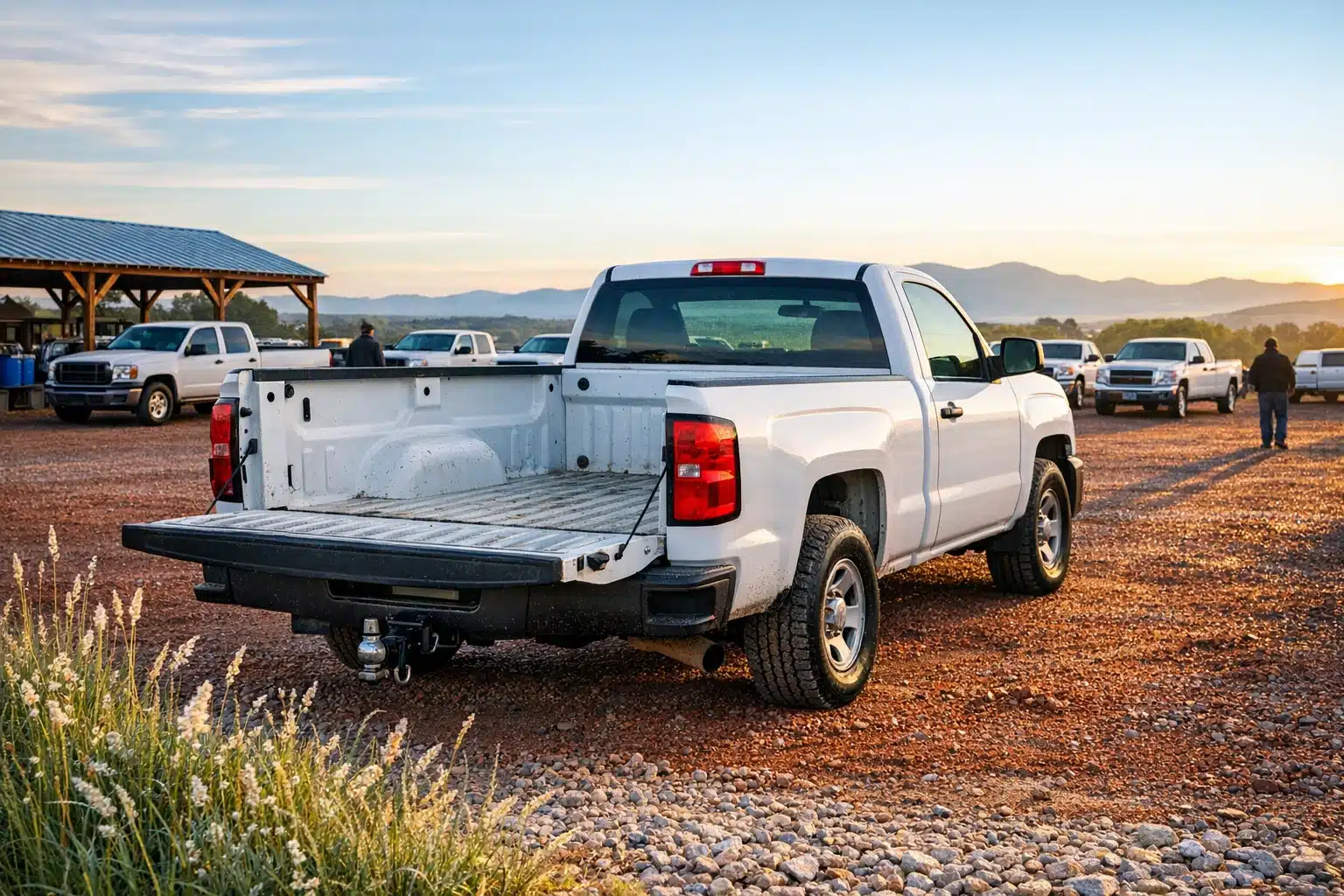
Start with the frame and body. Surface rust may be manageable in many climates, but deeper corrosion around crossmembers, spring mounts, brake lines, and cab supports can turn a bargain into a liability. Look at the bed floor for dents, patched holes, warped panels, or bent tie-down points. These details reveal how the truck worked for a living. A few scars are normal. Structural distortion is not.
Next, pay close attention to signs of towing and load stress. Check the hitch receiver for heavy wear, inspect trailer wiring plugs, and notice whether the rear springs sag. Uneven tire wear can suggest alignment problems, worn suspension parts, or chronic overloading. If the truck is equipped with four-wheel drive, inspect the transfer case area, front differential, and CV boots. Mud packed into hidden corners may hint at rough off-road use, while fresh underbody spray can sometimes mask leaks or rust rather than solve them.
If preview rules allow a start-up, listen more than you admire. Cold starts can reveal battery weakness, exhaust leaks, injector noise, and timing-related rattles. Watch for warning lights that stay on, rough idling, delayed shifting, smoke, or an engine that seems reluctant to settle. If movement within the lot is allowed, pay attention to brake feel, steering play, transmission engagement, and clunks from the driveline.
A practical checklist helps keep emotions out of the moment:
- Confirm the VIN on the dashboard, title paperwork, and door sticker match
- Check for title branding, lien paperwork, or registration complications
- Inspect frame rails, rocker panels, cab corners, and bed mounts for rust
- Look for fluid leaks under the engine, transmission, transfer case, and axles
- Assess tire age and tread consistency across all four corners
- Examine the hitch, bed, tailgate, and suspension for work-related strain
- Verify whether keys, spare tire tools, and major accessories are present
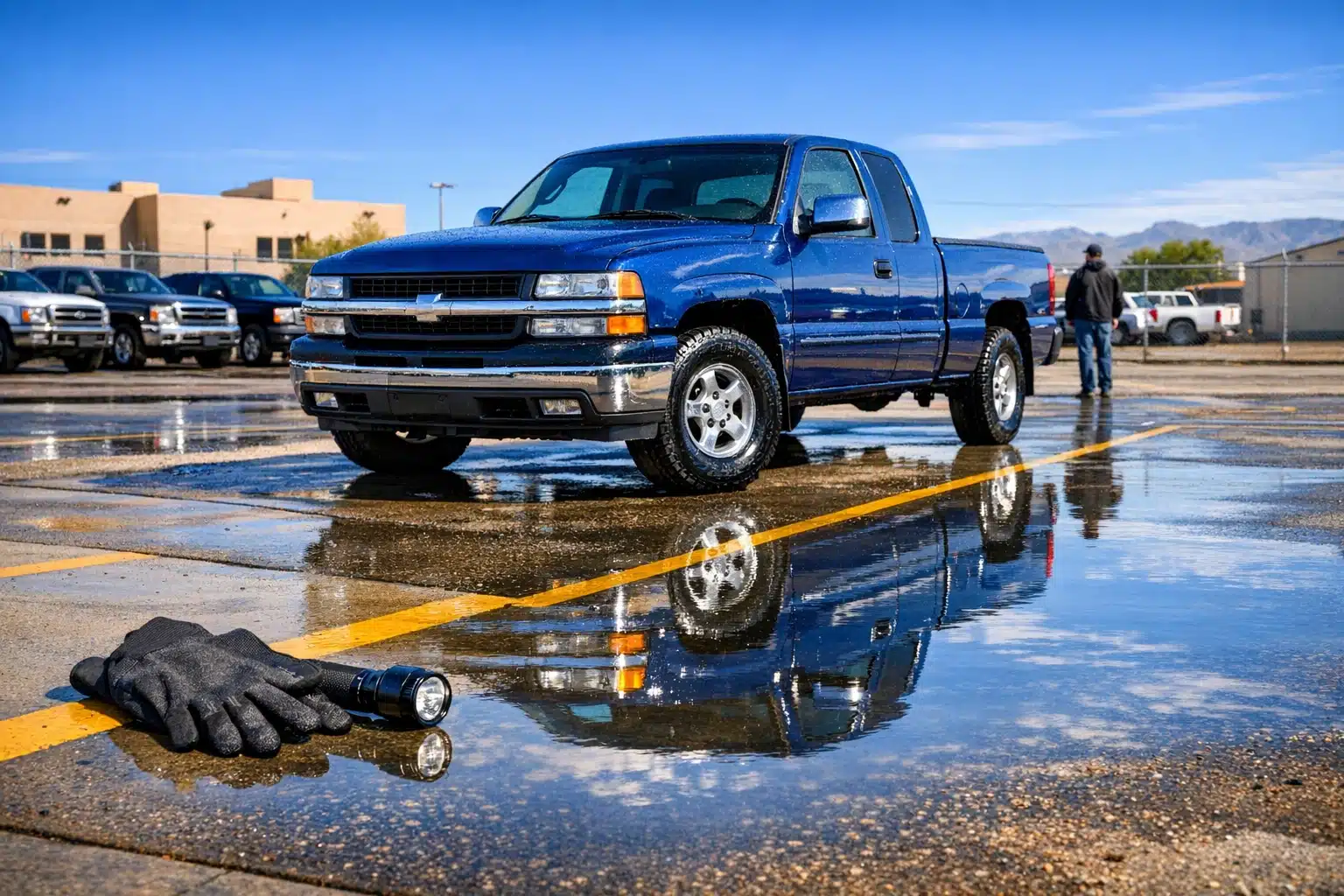
- Use a flashlight and, if permitted, a simple scan tool for stored codes
One more principle matters: do not confuse mileage with condition. A higher-mileage truck with clear service history and honest wear may be safer than a lower-mileage truck that sat neglected, flooded silently, or hauled beyond its limits. The inspection process is not about finding perfection. It is about identifying which flaws are affordable, which ones are inconvenient, and which ones should end the conversation immediately.
5. Budgeting, Bidding, and Deciding Whether an Impound Pickup Fits Your Needs
The smartest impound buyers do not arrive asking, “How cheap can I get this truck?” They ask, “What will this truck cost me after everything is included?” That shift in mindset changes the outcome. The winning bid is only the front door. Behind it sit taxes, fees, title transfer costs, towing, battery replacement, fluids, filters, insurance, tires, and the first round of repairs that often appears after a truck leaves the lot and enters real life.
A sensible budget starts with a ceiling, not a hope. Estimate your all-in maximum before the auction opens. Then subtract the nonnegotiable extras so you know the highest actual bid you can place. If your budget is $12,000 and you expect auction fees, registration, initial maintenance, and transport to absorb a meaningful portion, your bid limit must drop accordingly. This is how experienced buyers stay composed while others get pulled upward by competition and adrenaline.
It also helps to sort yourself into the right buyer category. Police impound pickup trucks tend to suit certain people better than others:
- DIY owners who can handle repairs and diagnostics themselves
- Contractors seeking a secondary work truck rather than a polished daily driver
- Rural buyers who value function over cosmetics
- Project-truck enthusiasts comfortable with delayed gratification
- Fleet managers who can spread maintenance risk across multiple vehicles
On the other hand, this path is usually less suitable for first-time buyers with tight cash flow, commuters who need immediate reliability, or anyone who cannot absorb a surprise repair soon after purchase. An impound auction is not automatically a trap, but it does favor people who can think in contingencies.
When the bidding starts, discipline matters more than optimism. Ignore the temptation to “win” for its own sake. Walk away if the title status is unclear, the truck cannot be inspected meaningfully, or the numbers no longer support the risk. There will always be another listing. Scarcity is often emotional, not practical.
For the target audience most interested in this market, the conclusion is straightforward. If you need a dependable pickup with little downtime, a good dealer or well-documented private sale may justify the higher price. If you can inspect carefully, budget honestly, and tolerate some uncertainty, police impound pickup trucks can offer useful value. The best outcome comes from treating the process like an evaluation, not a treasure hunt. Buy with a cool head, and the truck you bring home has a much better chance of becoming a tool instead of a lesson.