 Artificially generated image
 Mini Inground Pools in 2026: Design Ideas, Costs, and Planning Tips
Introduction
In many neighborhoods, the dream pool is getting shorter, narrower, and more intentional. Homeowners in 2026 are looking for water features that cool the yard, support relaxation, and still leave room for dining, gardening, or a simple stretch of lawn. That shift has turned mini inground pools into one of the most practical outdoor projects of the moment. They sit where smart design, tighter budgets, and better use of limited space meet.
Outline
- Why compact inground pools are gaining attention in 2026
- Popular shapes, materials, and layout ideas for smaller backyards
- Realistic budget ranges, hidden expenses, and long-term ownership costs
- Planning steps that influence permits, construction, and daily usability
- A final decision guide for homeowners choosing between convenience, style, and value
The 2026 Appeal of Mini Inground Pools
Mini inground pools have moved from niche luxury to mainstream backyard strategy. The reason is not hard to see. Land is expensive in many metro and suburban areas, new homes often sit on smaller lots, and homeowners want outdoor spaces that serve more than one purpose. A large pool can dominate a yard and demand a larger budget for excavation, decking, water treatment, and heating. A mini inground pool, by contrast, offers a more measured approach. It delivers the visual and lifestyle benefits of a built-in pool while asking less from the site and often less from the owner.
In practical terms, a mini inground pool usually falls into a footprint such as 8 by 16 feet, 10 by 20 feet, or 12 by 24 feet, though designs vary widely. Some are plunge pools meant for cooling off and quiet lounging. Others are compact exercise pools with resistance jets. Some homeowners choose a spool, a pool-spa hybrid that can be heated for year-round soaking and cooled in warmer months. These options fit the way people actually use backyards now: short breaks after work, relaxed weekend gatherings, and low-fuss outdoor living rather than large, once-a-month parties.
Technology also helps explain the trend. Variable-speed pumps, app-based controls, automatic covers, compact filtration systems, and efficient heat pumps make smaller pools easier to manage than older setups. In 2026, buyers are not simply asking, “Can a pool fit here?” They are asking sharper questions:
- Will it reduce maintenance stress?
- Can it work as a visual focal point in all seasons?
- Will it leave enough usable patio space around it?
- Can it be heated efficiently without shocking utility bills?
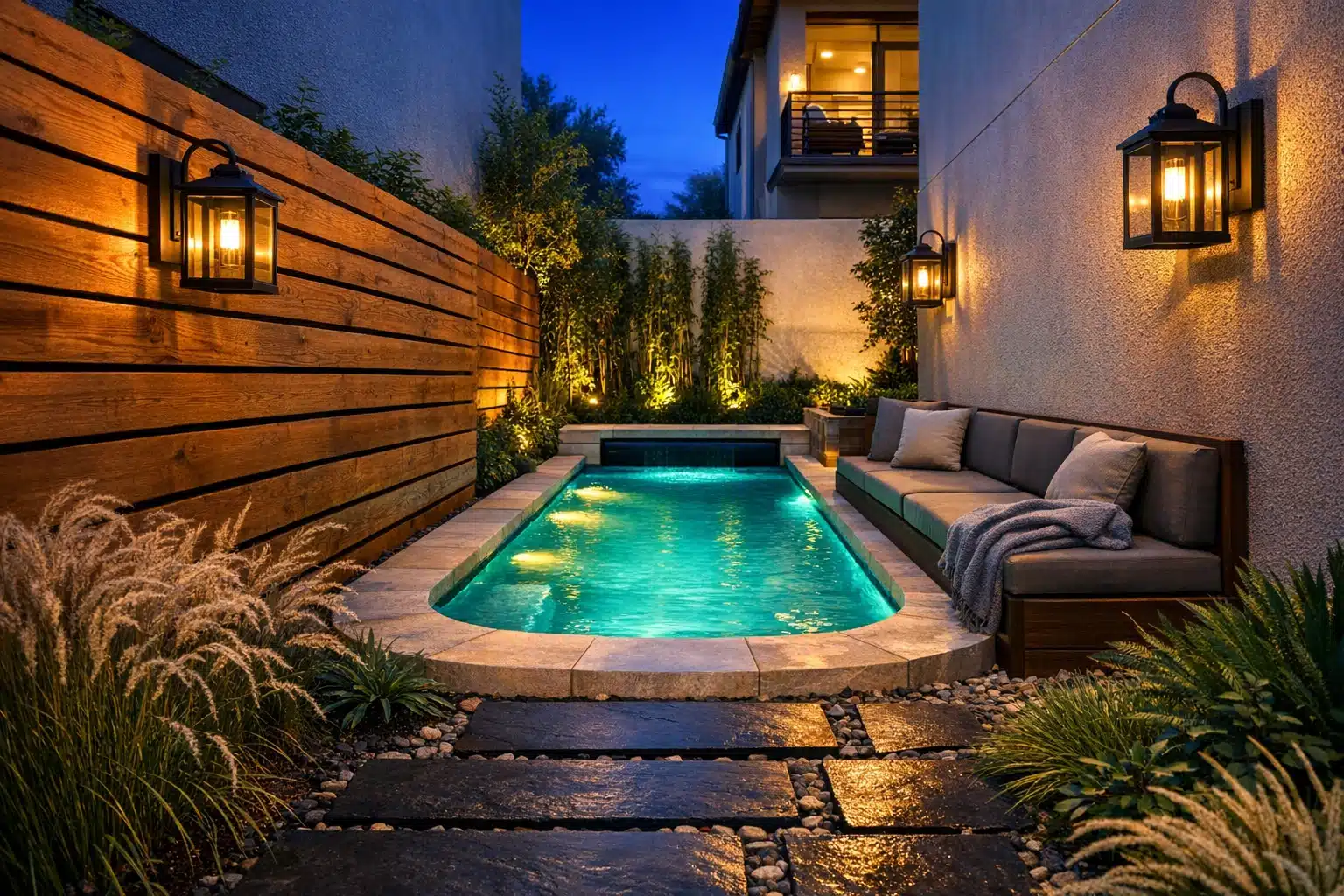
There is also a design shift at play. A mini pool can feel elegant rather than compromised when it is integrated into the landscape well. Narrow courtyards, side yards, and compact rear gardens can gain a strong architectural center from a small rectangle, a dark-finish plunge basin, or a minimalist pool framed by stone and planting beds. The water becomes part of the room-like outdoor composition. That matters in 2026 because homeowners increasingly think of the yard as a sequence of outdoor rooms, not just leftover space behind the house.
The big takeaway is simple: mini inground pools are relevant because they answer modern constraints without feeling like a downgrade. They offer cooling, beauty, and daily usability in a package that better matches how many people now live, spend, and entertain.
Design Ideas, Layout Choices, and Material Options
The best mini inground pools do not begin with size alone; they begin with purpose. A homeowner who wants quick summer dips, quiet reading by the water, and a crisp modern look will choose a very different design from someone who wants hydrotherapy, family play, and long seasonal use. That is why design planning in 2026 focuses on function first and style second, even though the final result often looks polished enough to stop visitors mid-sentence.
Shape is the first major decision. Rectangular pools remain the most popular because they use space efficiently, pair well with modern architecture, and simplify cover installation. A long, narrow rectangle works especially well on smaller lots because it preserves walking paths and can visually stretch the yard. Freeform mini pools feel softer and more organic, though they may use space less efficiently. Square plunge pools create a calm, sculptural look and suit courtyards, urban homes, and minimalist gardens. For homeowners who want warm-water versatility, spool designs offer a practical middle ground.
Materials matter just as much. Common choices include:
- Fiberglass, valued for faster installation, smooth surfaces, and predictable shell shapes
- Concrete or gunite, favored for custom forms, integrated benches, ledges, and premium finishes
- Vinyl-lined systems, sometimes used for budget-sensitive projects, though less common in high-design compact builds
Concrete typically wins when customization is the goal. It allows tanning ledges, wraparound seating, in-water steps, dark interior finishes, and sharp geometric edges. Fiberglass often appeals to buyers who want a quicker path from excavation to swimming, with somewhat fewer design variables. Neither choice is automatically “better”; the right answer depends on budget, soil conditions, aesthetic priorities, and local contractor expertise.
In 2026, many mini pool designs also include features once seen only in large installations. These include submerged benches, perimeter overflow details, integrated spas, baja shelves, compact waterfalls, and LED lighting that shifts the pool’s mood after sunset. Yet the strongest designs are rarely the most crowded. A small pool overloaded with features can feel visually busy and physically cramped. Often, restraint produces the best result. One clean coping material, one bench line, one planting palette, and one consistent paving style can make a modest pool feel deliberate and expensive.
Smart layout planning improves usability. Leave enough deck space for circulation, at least a few loungers or chairs, and safe entry points. If the yard is truly tight, place seating on one side and let planting soften the opposite edge. Consider privacy early by using fencing, trellises, evergreen screens, or carefully placed walls. Wind exposure, afternoon shade, and drainage patterns should influence orientation as well. A beautiful pool that sits in constant debris, loses heat quickly, or lacks privacy may disappoint despite excellent photos. Good design, in other words, is what the pool looks like on day one and how well it works on day one hundred.
What Mini Inground Pools Cost in 2026
Cost is where backyard dreams either sharpen into plans or drift back into sketches. Mini inground pools are usually less expensive than large inground pools, but “smaller” does not always mean “cheap.” Fixed costs such as permits, excavation mobilization, electrical work, safety barriers, and equipment pads still apply. In some projects, these baseline expenses are significant enough that reducing pool size saves less than homeowners expect. The smart approach is to treat the pool as a full outdoor system rather than a standalone shell.
In many U.S. markets in 2026, a basic mini inground pool may begin around the mid-five figures, while custom builds with premium finishes, heating, upgraded decking, automation, and site complications can climb substantially higher. Fiberglass mini pools often offer a more predictable price path, while custom concrete builds usually have the widest range. Regional labor costs, soil conditions, access to the yard, and municipal requirements can move estimates dramatically. A backyard with easy machine access and level ground is a different financial story from a narrow urban lot that requires hand work, retaining walls, or crane placement.
Homeowners should break pricing into categories so surprises are easier to catch:
- Pool shell or structural system
- Excavation and soil removal
- Plumbing, filtration, and pump equipment
- Electrical service, lighting, and automation
- Heating, sanitizer systems, and covers
- Decking, coping, fencing, and drainage
- Landscaping, furniture zones, and finish details
A useful rule of thumb is that the visible water area often represents only part of the project cost. The surrounding environment matters just as much. A mini pool set inside a well-finished patio with quality drainage and lighting may cost more than the pool structure suggests, but it usually delivers a better experience and stronger visual value.
Operating costs are another key factor. Smaller water volume usually reduces chemical use, heating demand, and cleaning time. That said, efficiency depends heavily on equipment choices. A variable-speed pump, heat pump, automatic cover, and sensible filtration schedule can lower monthly expenses compared with older or oversized systems. Saltwater chlorination can simplify maintenance for some owners, though it has its own equipment considerations. Expect recurring costs for electricity, water top-offs, seasonal opening and closing where relevant, cleaning supplies, and occasional part replacement.
If budget pressure is real, prioritize elements that are expensive to retrofit later. Structure, plumbing layout, equipment placement, drainage, and electrical capacity should be done properly from the start. Decorative upgrades such as premium tile accents or movable furniture can often wait. A careful budget does not kill the project; it often saves it from becoming an expensive compromise dressed up as a bargain.
Planning, Permits, Construction, and Common Mistakes
A mini inground pool may be physically small, but the planning process is not. Good outcomes depend on a sequence of decisions that are easy to underestimate at the beginning. Before anyone falls in love with tile samples or waterline details, the site needs a sober assessment. Property setbacks, utility lines, easements, slope, drainage, access for excavation equipment, and local barrier requirements all affect feasibility. In some jurisdictions, even a compact pool triggers detailed review for fencing, gates, alarms, and electrical safety. Starting design work before confirming these basics is like picking curtains before checking whether the house has windows.
Permitting in 2026 remains highly local. Some municipalities move quickly with digital submissions, while others require multiple reviews or additional approvals tied to drainage, lot coverage, grading, or historic district rules. That is why homeowners should ask prospective builders not only what they charge, but how they handle documentation. A reputable contractor should be able to explain what is typically required in the area, what timeline is realistic, and which site conditions could cause delays.
Construction planning should also account for material lead times and seasonal scheduling. Fiberglass shells may depend on manufacturing slots and transportation windows. Concrete work can be affected by weather, crew availability, and curing conditions. Automation systems, heat pumps, and specialty finishes may have separate procurement schedules. Even when a pool itself is compact, the calendar can stretch if decisions are made late or if the patio, landscaping, and fencing are treated as afterthoughts.
Several mistakes appear again and again in small-pool projects:
- Choosing a pool size that technically fits but leaves awkward or unsafe deck circulation
- Ignoring sun path, resulting in colder water or a lounge area with little usable shade
- Underestimating drainage, which can damage paving and create standing water after storms
- Installing equipment where noise disrupts seating areas or bedroom windows
- Skipping an automatic cover or heat strategy, then regretting the ongoing maintenance burden
Another common error is designing the pool in isolation from the rest of the yard. A mini pool works best when it belongs to a complete outdoor plan that considers lighting, planting, privacy, storage, and movement. Where will towels go? Is there an outdoor shower or rinse point? Can guests reach seating without crossing a slick pinch point? Will nearby trees drop debris into the water during peak season? These are not glamorous questions, but they shape whether the pool feels effortless or fussy.
Done well, planning reduces risk and improves daily enjoyment. A compact pool rewards precision. Every foot matters, every sightline counts, and every shortcut becomes more visible in a smaller space. Careful preparation is what turns a modest backyard pool into a highly functional outdoor retreat rather than a lesson in expensive optimism.
Conclusion: Is a Mini Inground Pool the Right Move for Your Home?
For many homeowners in 2026, a mini inground pool is not a second-choice substitute for a larger installation. It is the smarter answer. If your yard is limited, your budget needs boundaries, or your household prefers short, frequent use over occasional big gatherings, a compact pool can make far more sense than a sprawling design. It offers the cooling effect, visual calm, and outdoor-living upgrade people want, while often avoiding some of the space loss and maintenance load that come with larger pools.
The best candidates are homeowners who are honest about how they will use the space. If you picture quiet evening swims, a small social setting, hydrotherapy, a stylish focal point, or a water feature that elevates the patio, a mini pool deserves serious attention. If you need full-length lap training, large family games, or heavy entertainment capacity, you may need a different solution or a different layout strategy. Matching the pool to the household is more important than chasing a trend.
As you weigh the project, keep the decision anchored to a few questions:
- Do you want a pool that feels easy to own, not just exciting to install?
- Can the surrounding patio, privacy screening, and drainage be planned as part of one cohesive project?
- Are you budgeting for the hidden essentials as carefully as for the visible finishes?
- Will the design support the way you actually relax, entertain, and move through the yard?
That last question matters most. A successful mini inground pool feels like it belongs to the house and to the people who live there. It should improve daily life, not complicate it. For first-time pool buyers, downsizers, urban homeowners, and anyone trying to make a modest lot feel richer and more livable, this category offers real promise. Small water can still create a big atmosphere. The key is to plan with discipline, spend with clarity, and choose a design that serves your habits long after the first sunny weekend is over.
If you approach the project with those priorities in mind, a mini inground pool can become one of the most satisfying outdoor investments available in 2026: compact in size, substantial in impact, and tailored to the way modern homes actually work.