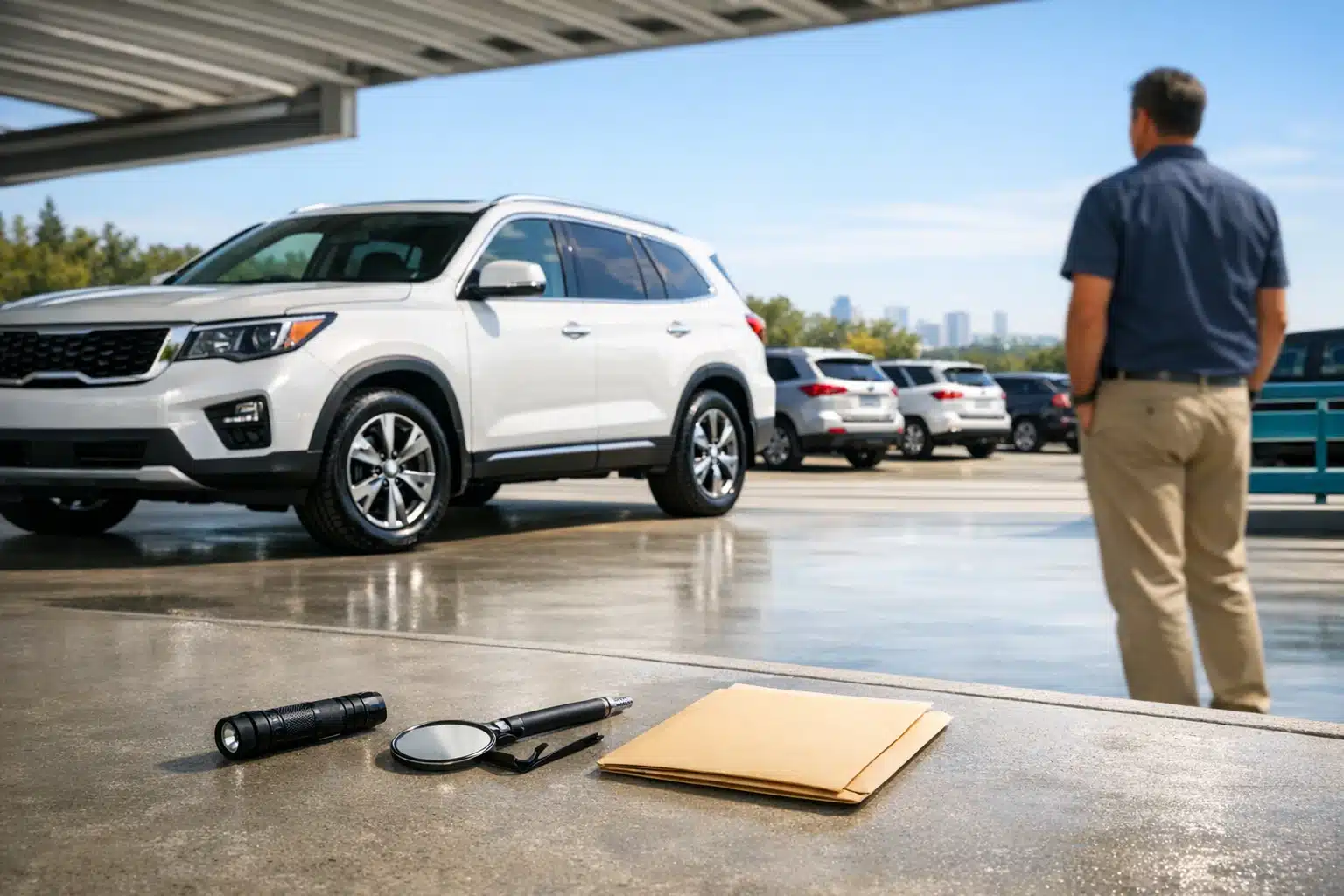
 Artificially generated image
 Police-Impound SUVs at Auction: What Buyers Should Know
Police-impound SUV auctions attract bargain hunters, first-time buyers, and small business owners because they can place practical vehicles within reach of tighter budgets. Yet the low bid that catches your eye is only the opening chapter. Condition, title status, service history, auction rules, and post-sale repair costs all shape whether the purchase becomes a smart deal or an expensive lesson. Understanding the process before bidding is what separates confidence from regret.
Outline and Why Police-Impound SUV Auctions Matter
Before diving into details, it helps to map the road ahead. This article covers the topic in five practical stages so readers can move from curiosity to decision-making without guessing. The outline is simple:
- Why police-impound SUV auctions draw attention in the used-car market
- How these vehicles end up at auction and what that suggests about condition
- The fine print around fees, titles, inspections, and auction rules
- How to set a bidding strategy and compare auction prices with other buying channels
- What happens after a winning bid and who is best suited to buy this way
The topic matters because SUVs sit in a sweet spot of the used vehicle market. Families like the cargo room, tradespeople appreciate the utility, and drivers in rough-weather regions often prefer higher ground clearance or all-wheel drive. That broad demand means even older SUVs can command strong prices on dealer lots. Auctions, by contrast, can feel like a side door into the same market. For some buyers, that side door opens onto a solid opportunity. For others, it opens onto an engine light, a towing bill, and a stack of paperwork that suddenly makes the “deal” look less charming.
Police-impound auctions are especially relevant during periods when used vehicle prices remain elevated compared with historical norms. When retail lots are full of SUVs priced beyond comfort, buyers start scanning alternatives. Some look at rental fleet sales, some at private sellers, and some at government or impound auctions. The appeal is understandable: lower starting bids, a steady flow of inventory, and the possibility of finding a late-model vehicle that was simply seized, abandoned, or towed rather than mechanically ruined.
Still, an impound auction is not a dealership with brighter lights and cheaper coffee. The environment is faster, the protections are thinner, and the responsibility shifts heavily onto the bidder. You may get limited inspection time, sparse maintenance records, and sale terms that favor the auction house, not the buyer. Think of it like fishing in deeper water: the catch can be rewarding, but you need better tools and steadier judgment. That is why informed preparation matters more here than in many ordinary used-car purchases. The goal is not merely to buy an SUV. The goal is to buy one that remains affordable after fees, transport, repairs, registration, and the first long drive home.
Where Police-Impound SUVs Come From and What Their Background Can Tell You
One of the biggest misunderstandings in this niche is assuming that all police-impound SUVs are former police vehicles. In reality, most are not. A police-impound SUV is usually a privately owned vehicle that entered custody for reasons such as unpaid tickets, abandonment, storage liens, arrests, evidence holds that have been cleared, or other legal and administrative processes. After the holding period ends and the vehicle is eligible for disposal under local rules, it may be sold through a public auction. That origin matters because it affects expectations.
A retired police fleet SUV often has a predictable service pattern, visible equipment marks, and heavy idle hours. A police-impound SUV can be far less predictable. It may have been someone’s daily family vehicle, a neglected work truck in SUV form, or a fairly recent crossover caught in a financial or legal spiral. The stories differ, and the condition often reflects those stories. A well-kept SUV that missed paperwork deadlines can sit just a few spaces away from a badly neglected model with suspension noise, worn tires, and missing keys.
Because the backstory is mixed, buyers need to focus on clues rather than assumptions. During preview periods, pay close attention to signs of use that matter especially on SUVs:
- Tire wear patterns that may hint at alignment or suspension issues
- Leaks under the engine, transmission, or differential areas
- Condition of transfer case components on four-wheel-drive models
- Dashboard warning lights or evidence that the battery has recently gone flat
- Interior wear in cargo areas, third rows, and seat mounts
- Rust around the underbody, rocker panels, and rear hatch seams
It is also useful to think about how impound circumstances can create problems unrelated to the vehicle’s original quality. An SUV may sit for weeks or months. Batteries discharge, tires develop flat spots, rodents sometimes enter parked vehicles, and moisture can turn small leaks into bigger cabin odors. Sometimes owners remove personal accessories before losing the vehicle; occasionally keys, floor mats, or infotainment cards disappear long before auction day. None of these issues automatically make the vehicle a bad buy, but they do change the true cost.
Background checks help fill some of the gaps. A VIN history report can reveal title brands, prior accidents, odometer records, or emissions history, though it will not tell you everything. Service stickers, inspection decals, and even the type of tires fitted can offer quiet clues. A matching set of recent tires may suggest recent spending. Mismatched cheap tires may suggest a budget-tight owner cutting corners. In auction lanes, SUVs do not speak, but they leave fingerprints everywhere for buyers willing to notice them.
Auction Rules, Titles, Fees, and Inspection Limits: The Fine Print That Changes the Deal
If condition tells you what the SUV might need, paperwork tells you whether buying it makes sense at all. This is where many first-time bidders stumble. They focus on the hammer price and overlook the framework surrounding it. Yet auction terms can change the economics of a purchase in minutes.
Most police-impound auctions sell vehicles as-is and where-is. That phrase is short, but it carries real weight. It generally means the seller does not guarantee that the SUV runs, passes inspection, includes complete accessories, or can be driven home. In many cases, there is no return policy. If the transmission slips on the way to the tow truck, the risk is usually yours. That is why preview rules matter. Some auctions permit visual inspection only. Others allow limited starts, but not road tests. A few provide basic lot notes, though buyers should treat those as helpful hints rather than promises.
Title status is another major dividing line. A lower price is less meaningful if the paperwork creates headaches later. Depending on location, buyers may encounter clean titles, salvage titles, rebuilt titles, lien-sale paperwork, or documents that require additional processing before registration. Rules vary by state and country, so the safest approach is to verify, before bidding, what exact document is being transferred and what your motor vehicle authority requires for registration, emissions, and insurance.
Fees can quietly lift a bargain into ordinary territory. Common costs include:
- Buyer’s premium, often charged as a percentage or flat fee
- Documentation or administrative fees
- Temporary storage charges if the vehicle is not removed quickly
- Towing or transport if the SUV is not road-ready
- Taxes, title transfer fees, registration, and emissions compliance costs
A practical buyer reads the auction catalog like a contract, not like a flyer. Note payment deadlines, accepted payment methods, deposit rules, and removal windows. Some auctions require same-day or next-day payment. Others penalize late pickup. If you are financing the purchase, be careful: many impound auctions expect immediate funds, which means traditional auto loan timing may not fit.
There is also a legal dimension to caution, though this article is not a substitute for local legal advice. Buyers should confirm that the VIN on the vehicle matches the paperwork, that title brands are disclosed if required, and that there are no surprises concerning emissions testing or rebuilt-vehicle inspections. A good rule is simple: if the auction listing is vague and the staff cannot clarify essential paperwork, walk away. In this environment, uncertainty is not romance. It is cost wearing a disguise.
How to Value an Auction SUV, Set a Maximum Bid, and Compare It with Dealer or Private Sales
The smartest bid is rarely the boldest one. It is the number that still makes sense after the excitement drains away. To reach that number, buyers need a method. Start with the market value of the same SUV in comparable trim, mileage, and condition from dealer listings and private-party ads in your region. Then adjust downward for uncertainty. An auction vehicle with no test drive, weak history, or visible repair needs should not be priced as if it were a dealer-certified model with reconditioning and a warranty.
A practical formula looks like this: estimated retail value minus expected repairs, minus auction fees, minus taxes and registration, minus transport, minus a risk cushion. That final cushion is crucial because hidden issues are common in any used vehicle and especially relevant in impound inventory. If your calculation leaves only a tiny gap between the auction total and a cleaner retail option, the auction no longer offers much advantage.
Consider a hypothetical example. Suppose similar dealer-listed SUVs sell for 18,000 dollars in your area. You inspect an impound unit and estimate it needs tires, brakes, a battery, and minor interior work costing 1,800 dollars. Add a buyer’s premium of 700 dollars, tax and title costs of 1,100 dollars, and transport or tow expenses of 250 dollars. If you also keep a 1,000-dollar risk cushion for issues not visible on the lot, your maximum rational bid lands far below the headline retail number. Many buyers skip that math and bid emotionally. That is how savings vanish.
It also helps to compare the three main used-SUV buying channels:
- Dealer purchase: generally higher price, but easier paperwork, some reconditioning, and occasionally a limited warranty
- Private sale: potentially fairer pricing and direct conversation with the owner, but quality varies and fraud screening is your responsibility
- Auction purchase: potentially lower entry price, but less protection, thinner information, and more work after the sale
For mechanically confident buyers, auctions can make sense because they can estimate repairs more accurately. For buyers who must pay retail shop rates for every fix, the margin for error is smaller. Time matters too. If you need transportation immediately, an auction SUV that needs registration work, tires, and diagnostics may cost more in inconvenience than in money. On the other hand, if you have patience, a trusted mechanic, and the discipline to stop bidding when numbers no longer work, auctions can yield respectable value.
One final tactic is to watch a few auctions before participating. Observe how quickly bidders move, which models attract heavy competition, and how fees alter final totals. Auctions have their own weather patterns. Some days are calm, some stormy, and some full of people chasing a bargain so hard that they accidentally overpay for it.
After the Hammer Falls: Next Steps, Common Repairs, and Final Advice for the Right Buyer
Winning the bid is not the finish line. It is the handoff. Once the auction ends, the real work begins quickly, and organized buyers handle it better than hurried ones. First, confirm payment instructions and deadlines. Save receipts, sale documents, and any title paperwork immediately. Before moving the SUV, verify whether it is legally operable, insured, and eligible for temporary transit in your area. If there is any doubt, arrange towing. Driving an unknown vehicle home because “it seems fine” is one of those choices that sounds thrifty right up until the shoulder of the highway becomes your waiting room.
Next comes the baseline service stage. Even if the SUV starts and moves well, assume you need to establish a maintenance starting point. Many experienced used-vehicle buyers prioritize:
- Fluid checks and changes for engine oil, coolant, transmission, and differentials where applicable
- Brake inspection, including pads, rotors, and brake fluid condition
- Tire age and tread evaluation, not just visual inflation
- Battery and charging-system testing
- Scan-tool diagnostics for stored fault codes
- Inspection of belts, hoses, filters, and suspension components
Some auction SUVs need only routine catch-up work. Others reveal more serious items such as timing chain noise, transfer-case wear, electrical drain problems, or air-conditioning failures. This is why the best candidates for impound-auction purchases are usually buyers with one or more of the following advantages: mechanical knowledge, access to affordable repairs, patience with paperwork, and flexibility about cosmetic imperfections. Buyers who want a polished, ready-to-drive vehicle with minimal uncertainty are often better served by a reputable dealer or a carefully screened private seller.
There is also a mindset component. Good auction buyers stay calm, accept that they will miss some vehicles, and never treat a bid like a personal challenge. They know that walking away is part of winning. The wrong SUV at the right-looking price can still be the wrong SUV. The right one is a vehicle whose total ownership cost fits your budget, your skill level, and your tolerance for risk.
Conclusion for Buyers Considering This Route
Police-impound SUV auctions can be worthwhile for readers who want utility and value, but only if they approach the process with research instead of impulse. The key questions are not just “How low is the bid?” but “What paperwork comes with it, what repairs are likely, and what will the SUV really cost after the dust settles?” For practical buyers willing to inspect carefully, calculate honestly, and leave room for surprises, auctions can open the door to a usable vehicle at a reasonable overall price. For everyone else, the safer bargain may be the one that looks less dramatic and comes with far fewer unknowns.